
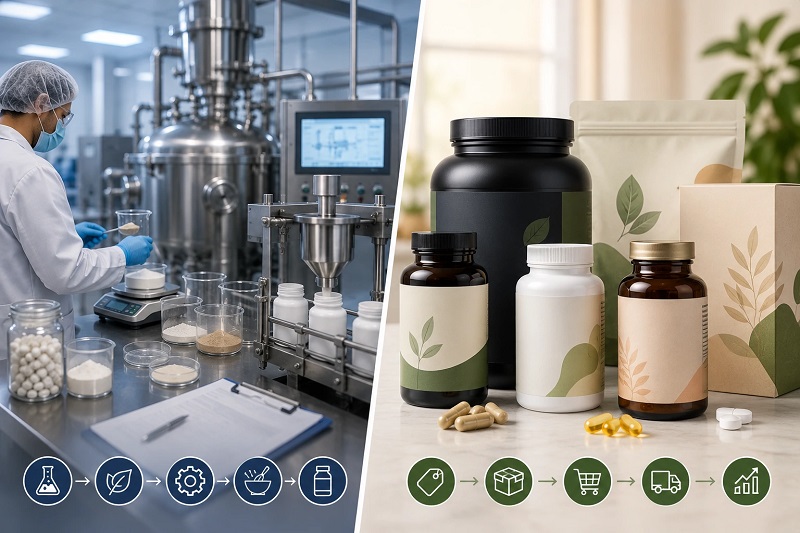
Walk into any health food store or scroll through an e-commerce marketplace, and you are met with thousands of bottles promising sharpened focus, balanced hormones, or enhanced athletic recovery. The modern dietary supplement aisle presents an overwhelming illusion of clinical authority, complete with minimalist labels, pharmaceutical-grade dropper bottles, and bold scientific claims. Yet behind this polished veneer lies an industry governed by fundamentally reactive regulations, creating fertile ground for counterfeits, contaminated batches, and outright fraudulent formulations.
Unlike prescription pharmaceuticals, dietary supplements do not undergo pre-market review or approval by the Food and Drug Administration before arriving in consumer hands. Under current federal frameworks, the responsibility for ensuring product safety and label accuracy rests almost entirely on manufacturers themselves. When bad actors exploit this honor system—or when illicit sellers clone legitimate packaging to peddle inert or adulterated powders on major online platforms—consumers pay the price with their wallets and their health. Navigating this marketplace safely requires learning how to identify genuine third-party testing, read verification data, and protect your supply chain from counterfeit products.
The Regulatory Gap and the Marketplace Blind Spot
To understand why counterfeit and substandard supplements are so pervasive, one must understand how the market is policed. The Dietary Supplement Health and Education Act of 1994 established that supplements are classified under the umbrella of foods rather than drugs. Manufacturers must adhere to Current Good Manufacturing Practices, which outline basic standards for sanitation, equipment maintenance, and quality control. However, federal inspectors generally step in only after adverse event reports surface, after private watchdog testing exposes illegal adulteration, or through infrequent spot audits.
The rapid migration of supplement commerce to algorithmic e-commerce platforms has drastically amplified this risk. Many online marketplaces utilize commingled inventory systems, where products from authorized brand storefronts and independent third-party distributors are grouped under a single warehouse bin if the barcode matches. If an unauthorized reseller ships counterfeit bottles filled with cheap fillers, heavy metals, or undisclosed synthetic stimulants to a fulfillment center, those fraudulent units can easily end up in an order placed through an otherwise trustworthy listing.
A glossy label and thousands of positive digital reviews are no longer proof of authenticity. Today, objective verification through independent testing is the only reliable shield a consumer has against contaminated and counterfeit formulas.
Decoding What Third-Party Testing Actually Means
Brand marketing often co-opts clinical terminology to fabricate trust. Phrases such as “lab tested,” “clinically formulated,” or “manufactured in an FDA-registered facility” sound authoritative, but they are frequently meaningless:
- FDA-registered facility simply means the manufacturing plant submitted basic address and contact paperwork to the federal government. It does not mean the facility was inspected, endorsed, or approved by the agency.
- In-house quality control means the company tested its own product using its own equipment. While ethical brands maintain rigorous internal laboratories, relying entirely on internal claims asks consumers to take a business at its word.
- True third-party testing requires an independent, ISO-accredited analytical laboratory with zero financial stake in the brand to evaluate the physical product for purity, identity, composition, and safety.
Legitimate independent testing answers four essential questions: Does the product contain what the label claims? Are the active ingredients present in the stated dosages? Is the batch free from dangerous contaminants like heavy metals, mold, and industrial solvents? And is the formula devoid of unlisted pharmaceutical agents?
The Gold-Standard Certification Seals
When evaluating a supplement, look for recognizable verification marks from established certification bodies. These organizations do not merely test a single sample sent by the manufacturer; they conduct ongoing batch audits, perform unannounced facility inspections, and test random off-the-shelf samples to ensure long-term consistency.
United States Pharmacopeia (USP)
The USP Verified Mark is one of the most rigorous designations in the dietary supplement industry. When you see this seal, the United States Pharmacopeia has audited the manufacturing facility, confirmed that the ingredients listed on the label are present in declared potencies, verified that the pill dissolves properly in the digestive tract, and screened for hazardous contaminants such as lead, arsenic, microbes, and pesticides.
NSF International
NSF offers two primary tiers of verification. The standard NSF Contents Certified mark confirms label accuracy, toxicological safety, and strict contaminant screening. For athletes, military personnel, and active professionals, the NSF Certified for Sport certification goes a step further by screening every single production lot for more than 280 banned athletic substances, masking agents, and unapproved steroids.
Informed Choice and Informed Sport
Administered by LGC, a world-class sports doping control laboratory, the Informed Sport and Informed Choice programs specialize in anti-doping and contamination surveillance. Informed Sport requires pre-market testing of every commercial lot before release, making it a trusted standard among professional athletic organizations.
Banned Substances Control Group (BSCG)
Founded by pioneers in anti-doping science, the BSCG Certified Drug Free program provides extensive analytical coverage against athletic banned substances, prescription medications, over-the-counter drugs, and industrial contaminants.
How to Audit a Certificate of Analysis
For brands that do not carry a major certification seal, a verifiable Certificate of Analysis (CoA) is your next line of defense. A CoA is an official laboratory document generated after testing a specific production run. Reputable supplement companies make these documents readily accessible on their website or will promptly provide one upon customer request.
When examining a CoA, inspect these core data points:
- The Testing Entity: The certificate should come from an independent, third-party laboratory, not the brand’s internal quality assurance department. Look for an ISO/IEC 17025 accreditation on the document, which confirms the testing lab operates under internationally recognized analytical proficiencies.
- Matching Batch Numbers: The lot number or batch code printed on the bottom or side of your physical bottle must match the lot number recorded on the certificate. A generic CoA from two years prior does not validate the bottle currently in your hand.
- Purity and Contaminant Thresholds: A comprehensive CoA will detail specific parts-per-billion or parts-per-million measurements for heavy metals—specifically lead, cadmium, arsenic, and mercury—alongside negative test results for pathogens like Salmonella, E. coli, and total yeast and mold counts.
- Active Potency Assays: Check whether the laboratory measured the exact concentration of active botanicals, vitamins, or amino acids, and ensure those measured values align closely with the percentages stated on the product label.
If a company refuses to share a batch-specific CoA, claims the data is proprietary, or provides a document with redacted testing dates and lab credentials, set the bottle down.
Supply Chain Hygiene: Where and How to Buy Safely
Avoiding counterfeit formulas requires paying as much attention to the purchase channel as the ingredients inside the capsule. The safest route is always to buy directly from the manufacturer’s official website. Bypassing intermediaries guarantees that the product was stored under proper climate conditions and shipped directly from the brand’s authorized distribution hub.
If purchasing through digital retail hubs, scrutinize the specific seller listing. Avoid unauthorized third-party storefronts offering heavy discounts on popular name brands. Ensure the item states that it is both “Sold by” and “Shipped by” the verified brand name rather than an obscure third-party enterprise operating out of a residential address.
Additionally, utilize licensed healthcare professional dispensaries or reputable specialty apothecaries that source their inventory through closed-loop, verified distributor networks. Cross-reference any third-party certification seals against the public directories maintained on the certifier’s official website; counterfeiters frequently copy certification logos onto fake labels, but they cannot forge a listing in an official online database.
Taking control of your supplementation routine requires an investigative mindset. By demanding verifiable third-party certification, auditing analytical test results, and maintaining disciplined purchasing habits, you can protect your health and ensure that the supplements you consume deliver real nutritional value rather than hidden hazards.