
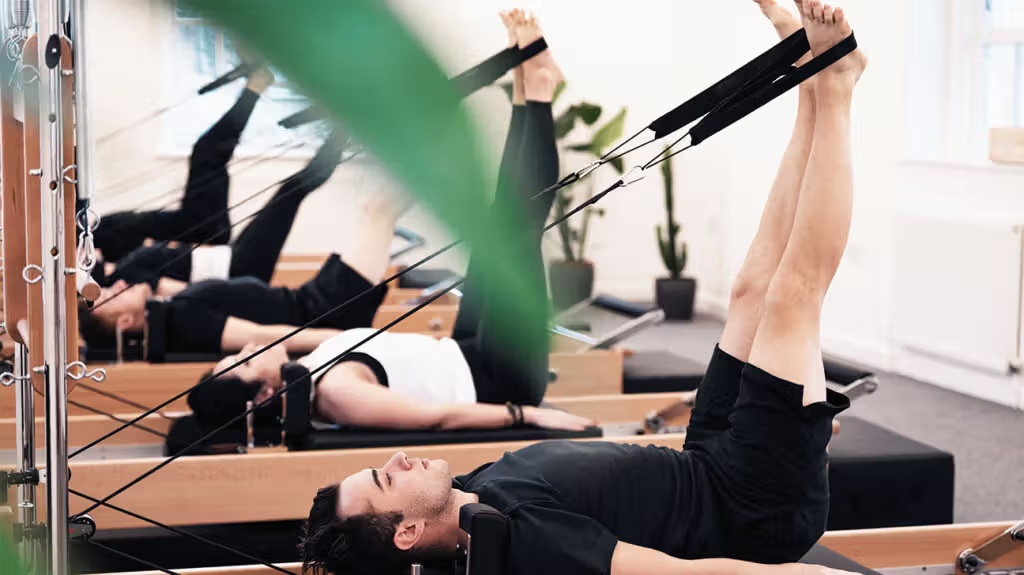
Modern movement problems rarely come from a single muscle or joint. Most injuries develop slowly, often starting with poor pelvic stability that affects how force travels through the body. In Singapore, where long hours of sitting, limited recovery time, and high daily stress are common, many people unknowingly move with unstable foundations. This is where reformer pilates Singapore plays a crucial role, not as a trend but as a methodical system for restoring control, balance, and resilience from the centre of the body outward.
Pelvic stability is not about tightening everything or bracing constantly. It is about learning how to control movement through the hips, spine, and lower limbs under load. Reformer Pilates uses spring resistance, guided tracks, and precise sequencing to build this control in a way that mat work alone often cannot.
Understanding Pelvic Stability Beyond Core Strength
Pelvic stability is often misunderstood as simply having a strong core. In reality, it involves coordination between multiple systems working together.
These include:
-
Deep abdominal muscles that support spinal alignment
-
Hip stabilisers that guide leg movement
-
Pelvic floor muscles that manage pressure and balance
-
Breathing patterns that regulate internal load
-
Nervous system timing that controls when muscles activate
When these elements are out of sync, movement becomes inefficient. Over time, this inefficiency increases strain on the knees, lower back, hips, and even shoulders. Reformer Pilates addresses this by training stability in motion rather than static holds.
Why Pelvic Instability Leads to Injury
Pelvic instability often shows up subtly. You may not feel pain initially, but small compensations accumulate.
Common signs include:
-
Lower back tightness after standing or walking
-
Knee discomfort during stairs or squats
-
Hip clicking or uneven stride
-
Frequent muscle strains without clear cause
-
Feeling strong but unstable during exercise
Without proper pelvic control, force leaks through the body. Muscles overwork to compensate, joints absorb stress they are not designed to handle, and injury risk increases.
How Reformer Pilates Builds Injury-Resistant Movement
Reformer Pilates is uniquely suited to pelvic stability training because it allows resistance to be applied in controlled, adjustable ways.
Key features that support injury prevention include:
-
Springs that provide both assistance and challenge
-
A moving carriage that exposes instability safely
-
Guided rails that encourage alignment awareness
-
Adjustable load to match individual capability
-
Precision-based exercises that prioritise control over speed
Rather than forcing the body into positions, the reformer reveals movement habits. This feedback helps practitioners correct patterns before they become problems.
Load Without Impact
One major advantage of reformer training is its ability to load muscles without impact. This is especially important for people managing joint sensitivity, previous injuries, or early signs of degeneration.
Benefits include:
-
Strength gains without compressive stress
-
Improved joint lubrication through controlled movement
-
Reduced risk of flare-ups during progression
-
Safer return to training after injury
Because the resistance is spring-based, it adapts throughout the range of motion, encouraging smooth, consistent control.
Pelvic Floor Integration in Reformer Pilates
Pelvic floor health is often overlooked until issues arise. In reality, it is central to injury prevention and long-term movement quality.
Reformer Pilates integrates pelvic floor engagement naturally through breathing and movement patterns rather than isolated contractions.
This approach helps:
-
Improve coordination rather than tension
-
Support internal pressure during effort
-
Enhance balance and postural control
-
Reduce unnecessary gripping or bracing
By training the pelvic floor as part of a functional system, the body learns to respond appropriately under different demands.
Breathing and Stability Connection
Breathing mechanics directly influence pelvic stability. Shallow breathing increases tension and reduces control, while coordinated breathing improves efficiency.
Reformer Pilates encourages:
-
Lateral rib expansion
-
Controlled exhalation during effort
-
Pressure management through movement
-
Reduced reliance on surface muscles
This breathing approach supports endurance and reduces fatigue-related breakdowns that often lead to injury.
Injury Prevention for Daily Life, Not Just Exercise
In Singapore, many injuries occur outside the gym. Long commutes, prolonged sitting, carrying loads, and sudden movements all challenge pelvic stability.
Reformer Pilates prepares the body for these realities by training movement patterns that translate directly to daily tasks.
Examples include:
-
Standing up smoothly from seated positions
-
Walking with even weight distribution
-
Climbing stairs without knee collapse
-
Lifting objects without spinal strain
-
Maintaining balance during directional changes
By reinforcing proper mechanics repeatedly, the body begins to move more efficiently without conscious effort.
Reformer Pilates for Sports and Active Lifestyles
Athletes and active individuals often assume injuries come from pushing too hard. More often, they result from poor load transfer through the pelvis.
Reformer Pilates supports injury prevention in sports by:
-
Enhancing unilateral strength and control
-
Improving hip and trunk coordination
-
Reducing asymmetries between sides
-
Supporting recovery between training sessions
-
Improving proprioception and awareness
This makes it particularly valuable for runners, cyclists, golfers, and court sport players who rely heavily on rotational and single-leg movements.
Progressive Stability Without Overtraining
One of the challenges in injury prevention is balancing training stimulus with recovery. Reformer Pilates allows progression without excessive fatigue.
Progression can occur through:
-
Adjusting spring resistance
-
Increasing movement complexity
-
Adding balance challenges
-
Refining tempo and control
-
Integrating multi-planar movement
This layered progression builds durable stability rather than short-term strength.
Why Studio Environment Matters
Effective pelvic stability training requires precision, feedback, and progression. A structured studio environment allows for these elements to be applied consistently.
At Yoga Edition, reformer sessions are designed to emphasise control, alignment, and individual adaptation rather than generic routines. This ensures that stability gains are meaningful and sustainable rather than superficial.
Long-Term Benefits of Pelvic Stability Training
Over time, consistent reformer practice leads to changes that extend beyond injury prevention.
These include:
-
Improved posture without conscious correction
-
Reduced muscle tension during daily activities
-
Greater confidence in movement
-
More efficient energy use
-
Enhanced resilience to physical stress
Rather than reacting to pain, the body becomes proactive in maintaining balance and control.
Who Benefits Most From This Approach
Pelvic stability training through reformer Pilates is valuable for a wide range of individuals.
It is especially helpful for:
-
Office professionals with sedentary routines
-
Individuals returning from injury
-
Active adults experiencing recurring strains
-
Those managing joint sensitivity
-
People seeking long-term movement quality rather than quick fixes
Because resistance and complexity can be adjusted, sessions remain appropriate across different life stages.
Real-Life FAQs
Q: How long does it take to notice changes in pelvic stability?
A: Many people feel improved control within a few sessions, especially during standing and walking. Structural strength improvements typically develop over six to eight weeks with consistent practice.
Q: Can reformer Pilates help if I already have recurring injuries?
A: Yes, provided sessions focus on movement quality rather than intensity. Reformer training is often used to address underlying stability issues that contribute to recurring problems.
Q: Is this suitable if I feel strong but still get injured easily?
A: Strength does not always equal control. Reformer Pilates targets coordination and load transfer, which are common missing links for injury-prone individuals.
Q: Will pelvic stability training make my movements feel stiff?
A: No. When done correctly, it improves fluidity and efficiency rather than rigidity. The goal is responsive stability, not constant tension.
Q: Can this help with balance issues as I get older?
A: Yes. Pelvic stability plays a major role in balance and fall prevention. Controlled reformer work supports both strength and neuromuscular coordination.
Q: How often should I practise for injury prevention benefits?
A: Two to three sessions per week is effective for most people. Consistency matters more than frequency, especially when focusing on control.